

Step A3: System Two – Stability and Conflict Resolution
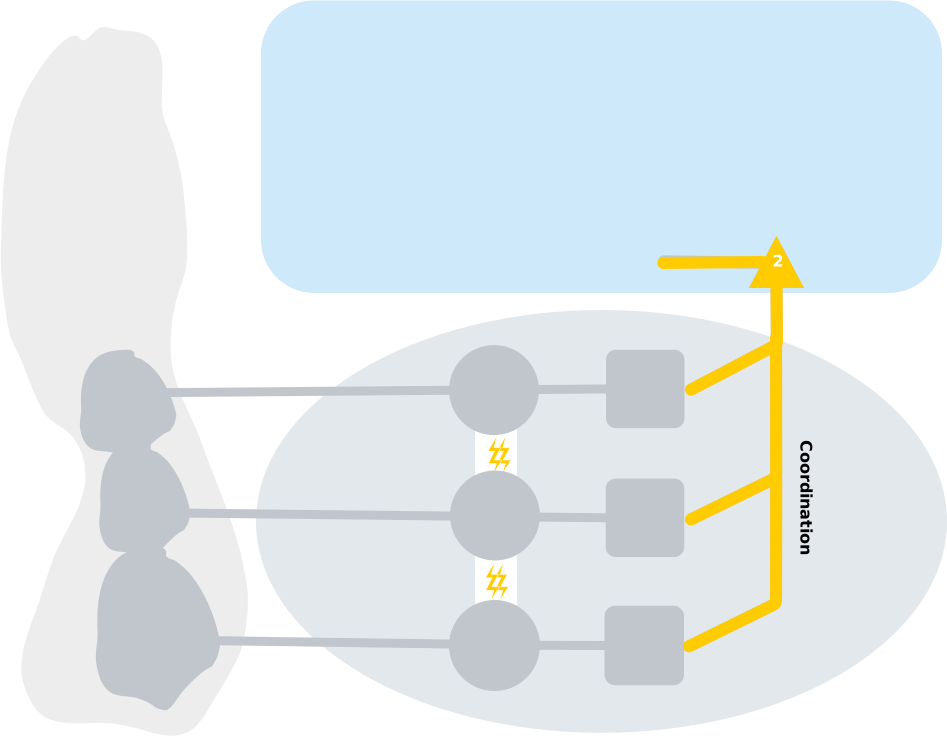
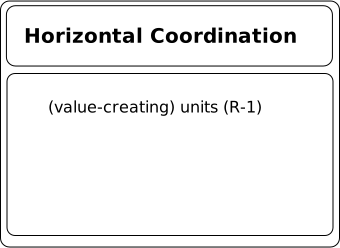
Step A3 focuses on identifying and analyzing System 2, which ensures stability and coordination between operational units (System 1). This step evaluates the mechanisms in place to reduce oscillations, resolve conflicts, and enhance synchronization between different parts of the System-in-Focus (SiF). The results of this step clarify how well the organization manages day-to-day interactions and where improvements are needed.
Key Outcomes:
- Identified Existing Coordination Mechanisms:
- Mapped formal and informal synchronization processes, including meetings, workflow tools, and decision-making protocols.
- Recognized key roles, teams, and technologies facilitating coordination between operational units.
- Detected Areas of Instability and Conflicts:
- Highlighted recurring issues related to resource competition, process misalignment, and inconsistent decision-making among operational units.
- Identified units or functions that experience frequent disruptions due to a lack of effective stabilization mechanisms.
- Evaluated the Effectiveness of System 2:
- Assessed whether existing coordination tools (such as standard operating procedures, governance committees, and reporting structures) effectively reduce operational inefficiencies.
- Determined if the organization relies too heavily on top-down management interventions instead of peer-to-peer coordination.
- Mapped Interactions Between Operational Units:
- Documented dependencies and interaction patterns between Systems 1, providing insights into where coordination efforts need to be strengthened or simplified.
- Analyzed where unstructured or missing coordination channels are leading to operational delays or confusion.
- Highlighted Gaps in Horizontal Communication:
- Identified critical information bottlenecks that prevent smooth collaboration.
- Noted areas where lack of standardization in processes leads to unnecessary complexity or inefficiencies.
- Prepared the Groundwork for Strengthening System 2:
- Suggested improvements such as better-defined workflows, enhanced collaboration tools, and increased role clarity for coordination functions.
- Provided a foundation for designing more robust conflict resolution mechanisms that can be implemented in later steps.
The results of Step A3 ensure that operational units (System 1) have the stability needed to function efficiently without excessive external intervention. By identifying weaknesses in horizontal coordination, the organization is now prepared to analyze management structures (System 3) in Step A4, where resource allocation and optimization strategies will be addressed. .