

Step A5: System Four – Future Planning and Adaptation
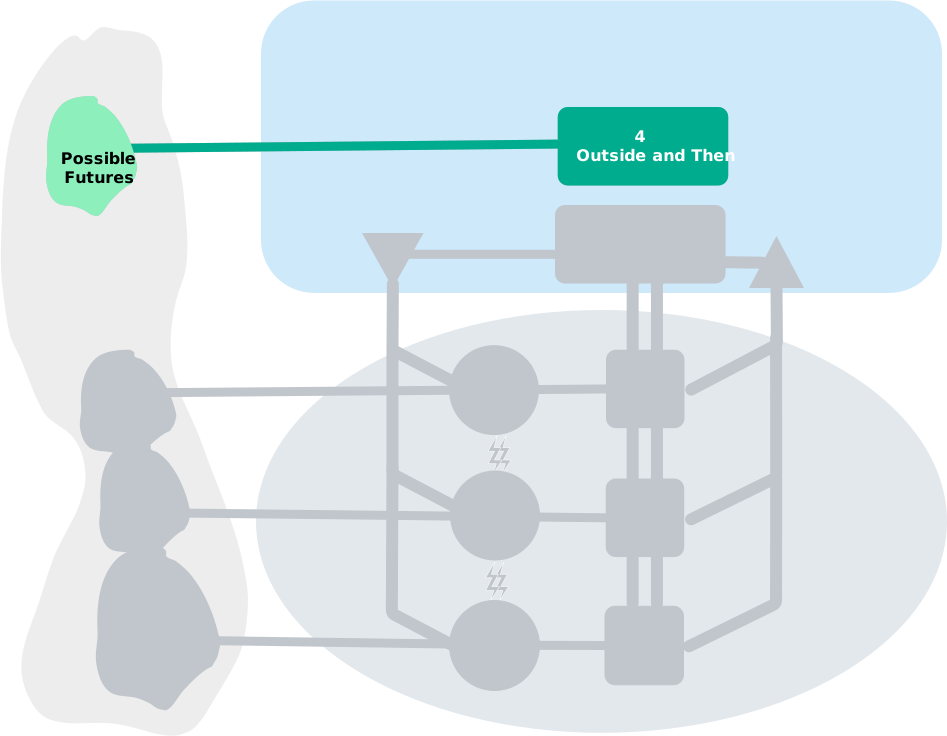
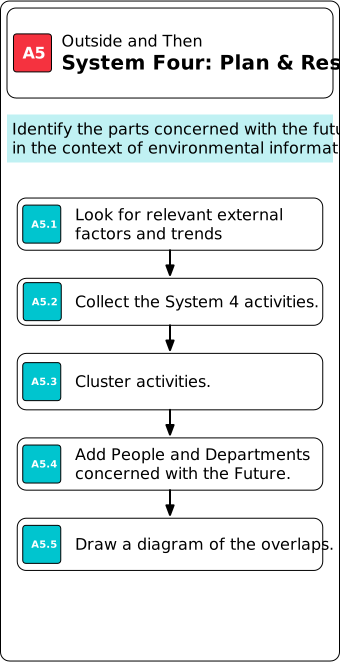
Step A5 focuses on analyzing System 4, which is responsible for external awareness, strategic foresight, and long-term adaptation within the System-in-Focus (SiF). The results of this step provide insights into how well the organization anticipates changes, innovates, and aligns its operations with evolving environmental conditions.
Key Outcomes:
- Mapped External Environment and Key Influences:
- Identified market trends, technological advancements, regulatory changes, and competitor activities that impact the SiF.
- Assessed how effectively the organization monitors external factors and incorporates them into strategic planning.
- Evaluated the Organization’s Ability to Anticipate and Adapt:
- Determined whether structured processes exist for scanning the external environment and translating insights into action.
- Assessed how frequently and effectively long-term planning influences operational decision-making.
- Identified Existing Strategic Development Functions:
- Mapped research & development (R&D), market analysis, innovation teams, and strategic planning units within the organization.
- Evaluated how well these functions are integrated with operational management (System 3) and policy-setting (System 5).
- Detected Gaps in Future-Oriented Capabilities:
- Highlighted areas where the organization lacks a proactive approach to change, leading to a reactive rather than adaptive strategy.
- Noted whether System 4 has sufficient authority, resources, and influence to drive meaningful strategic shifts.
- Bridged the Gap Between Present Operations and Future Needs:
- Assessed the quality of communication between System 3 (operational efficiency) and System 4 (future planning) to prevent strategic misalignment.
- Identified conflicts between short-term execution and long-term innovation that need resolution through structured decision-making.
- Established a Foundation for Continuous Learning and Innovation:
- Evaluated the organization’s ability to experiment, iterate, and scale innovations that emerge from future-planning initiatives.
- Suggested mechanisms for fostering a culture of continuous learning and cross-functional collaboration.
The results of Step A5 ensure that the organization is not only optimized for current performance but also prepared for future challenges and opportunities. With a clear understanding of how System 4 integrates with operational and strategic functions, the organization can now analyze System 5 (identity and policy-making) in Step A6, ensuring long-term viability and coherence. .
Subpages
Related Pages