

Step A6: System Five – Identity and Policy Making
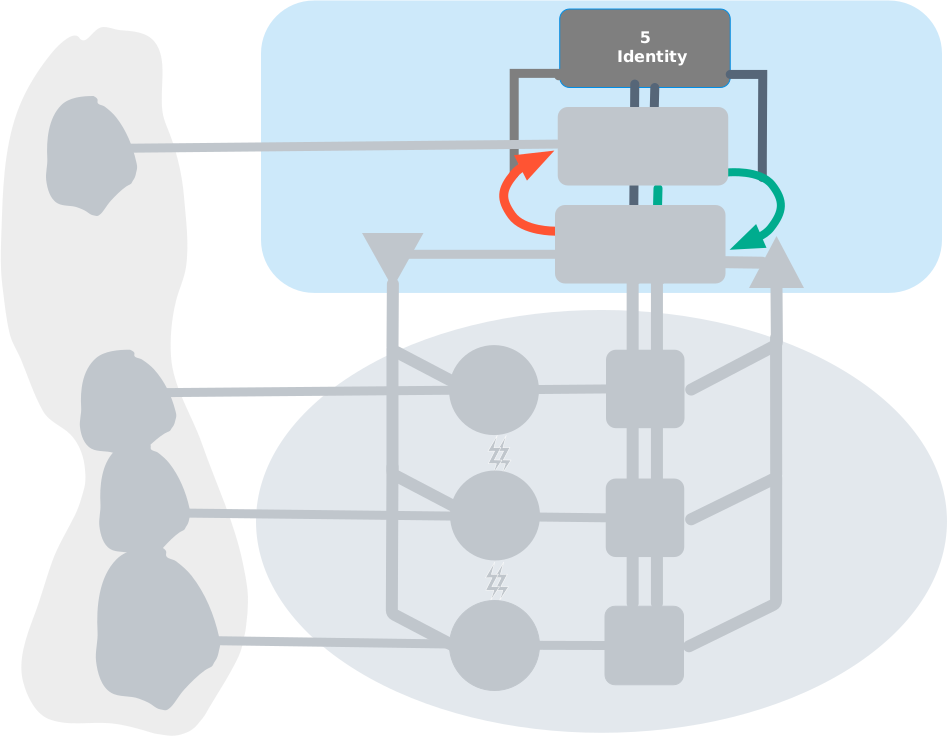
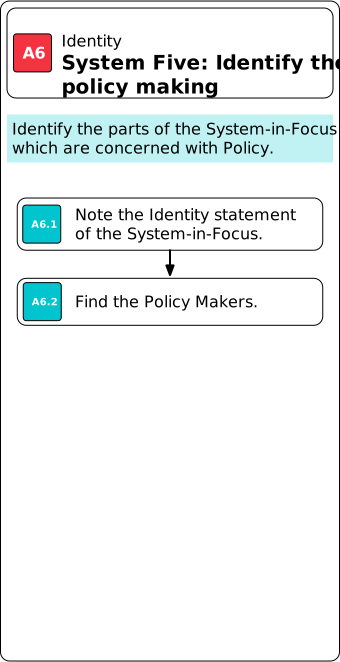
Step A6 focuses on analyzing System 5, which is responsible for defining the identity, mission, and strategic direction of the System-in-Focus (SiF). This step ensures that the organization's core values and long-term vision guide decision-making at all levels. The results provide insights into how well the organization maintains coherence between operational efficiency (System 3), future planning (System 4), and its overarching mission.
Key Outcomes:
- Defined the Identity and Purpose of the SiF:
- Clarified the core mission, values, and guiding principles that shape decision-making.
- Assessed whether these elements are consistently communicated and understood across the organization.
- Mapped Governance and Policy-Making Structures:
- Identified boards, executive committees, and key decision-makers responsible for setting high-level policies.
- Evaluated the effectiveness of governance frameworks in ensuring alignment between strategic goals and daily operations.
- Assessed the Balance Between Stability and Adaptation:
- Determined whether System 5 provides sufficient oversight without over-controlling operational or strategic flexibility.
- Identified whether policies are rigid or adaptable enough to accommodate environmental changes.
- Examined the Effectiveness of System 5’s Influence on the Organization:
- Evaluated whether policy decisions resonate throughout all levels of the organization.
- Assessed whether System 5 moderates conflicts between operational execution (System 3) and long-term innovation (System 4) effectively.
- Identified Gaps in Leadership and Decision-Making:
- Highlighted any misalignments between leadership vision and organizational reality.
- Assessed whether policy-making structures are inclusive and reflective of stakeholder needs.
- Strengthened the Connection Between Identity and Execution:
- Ensured that daily operations, strategic planning, and governance structures reinforce the organization’s core mission.
- Provided recommendations to improve organizational coherence, transparency, and accountability.
The results of Step A6 ensure that the organization has a strong, guiding identity that shapes its decision-making processes while allowing for necessary adaptation and growth. With System 5 effectively moderating the balance between operational efficiency (System 3) and innovation (System 4), the organization is now well-positioned to move forward into the Orient phase, where improvement potentials and dysfunctions are analyzed for further refinement.