

The Tautai Principle
The Tautai Principle presents strategic adaptivity as a competitive capability—sensing market shifts and responding faster than competitors. Inspired by Polynesian wayfinding, it replaces predict-and-control management with sense-and-respond approaches. The book provides frameworks for distributed decision-making, weak signal detection, and continuous adaptation, including a 90-day implementation plan.
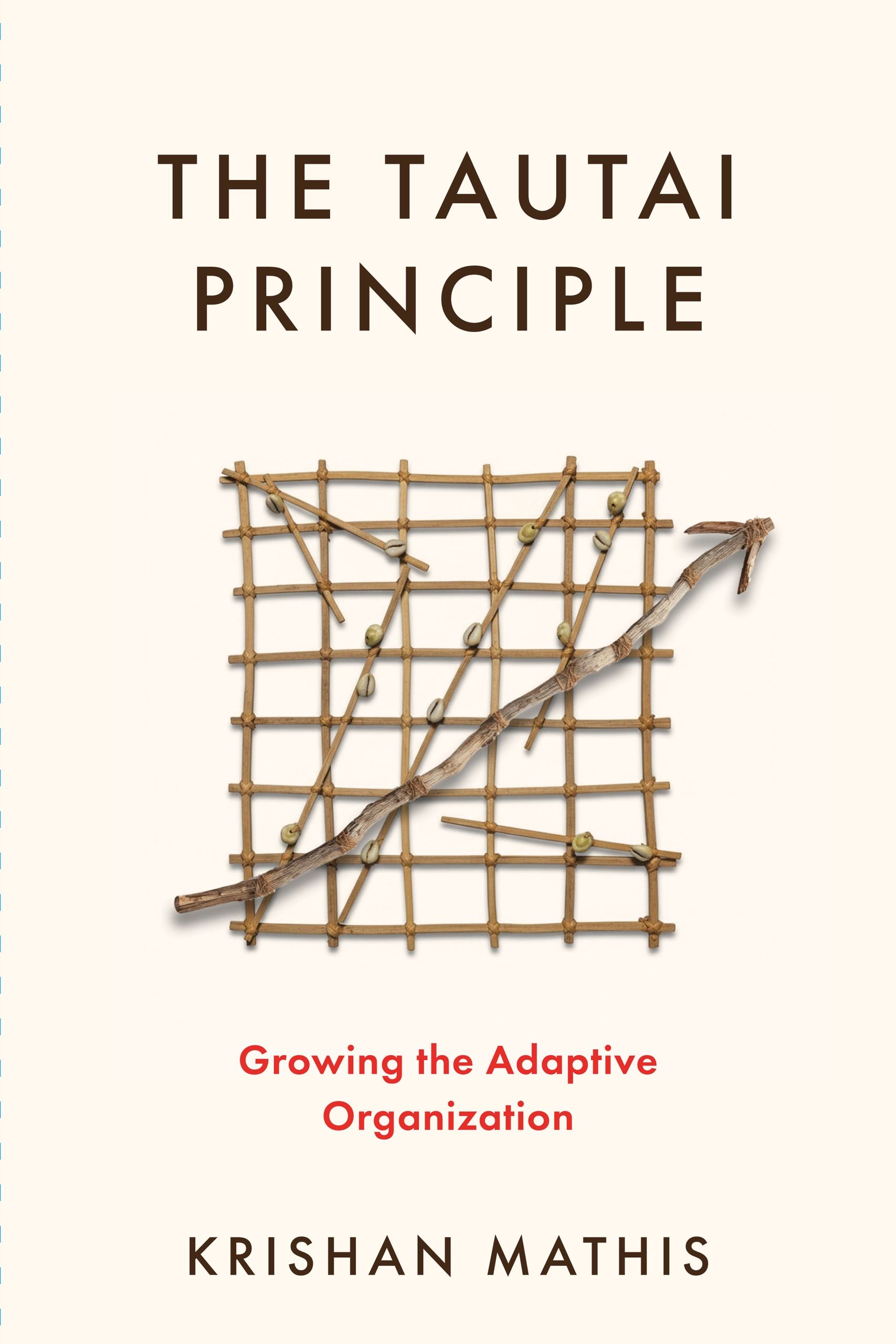
Growing the Adaptive Organization
The Tautai Principle addresses a fundamental challenge facing organizations today: traditional predict-and-control management creates competitive disadvantage in volatile markets. While companies spend months perfecting strategic plans, adaptive competitors are already testing solutions and capturing opportunities.
The book draws its central metaphor from Polynesian wayfinders—the Tautai—who navigated vast ocean distances by reading weak signals: subtle wave patterns, bird flight, wind shifts. They understood that stability came not from rigid plans but from constant adaptation. This mirrors the core challenge for modern organizations operating in environments shaped by geopolitical disruption, interconnected crises, and AI acceleration.
Author Krishan Mathis introduces strategic adaptivity as the capability to sense market shifts and respond weeks faster than competitors. This requires moving beyond the "fitness delusion" of lagging financial metrics toward viability—a holistic capacity built on four interconnected pillars: adaptivity (changing before you have to), resilience (turning setbacks into advantages), robustness (reliability where it matters), and operational excellence (consistent value delivery).
The book provides practical frameworks across sixteen chapters, organized in four parts.
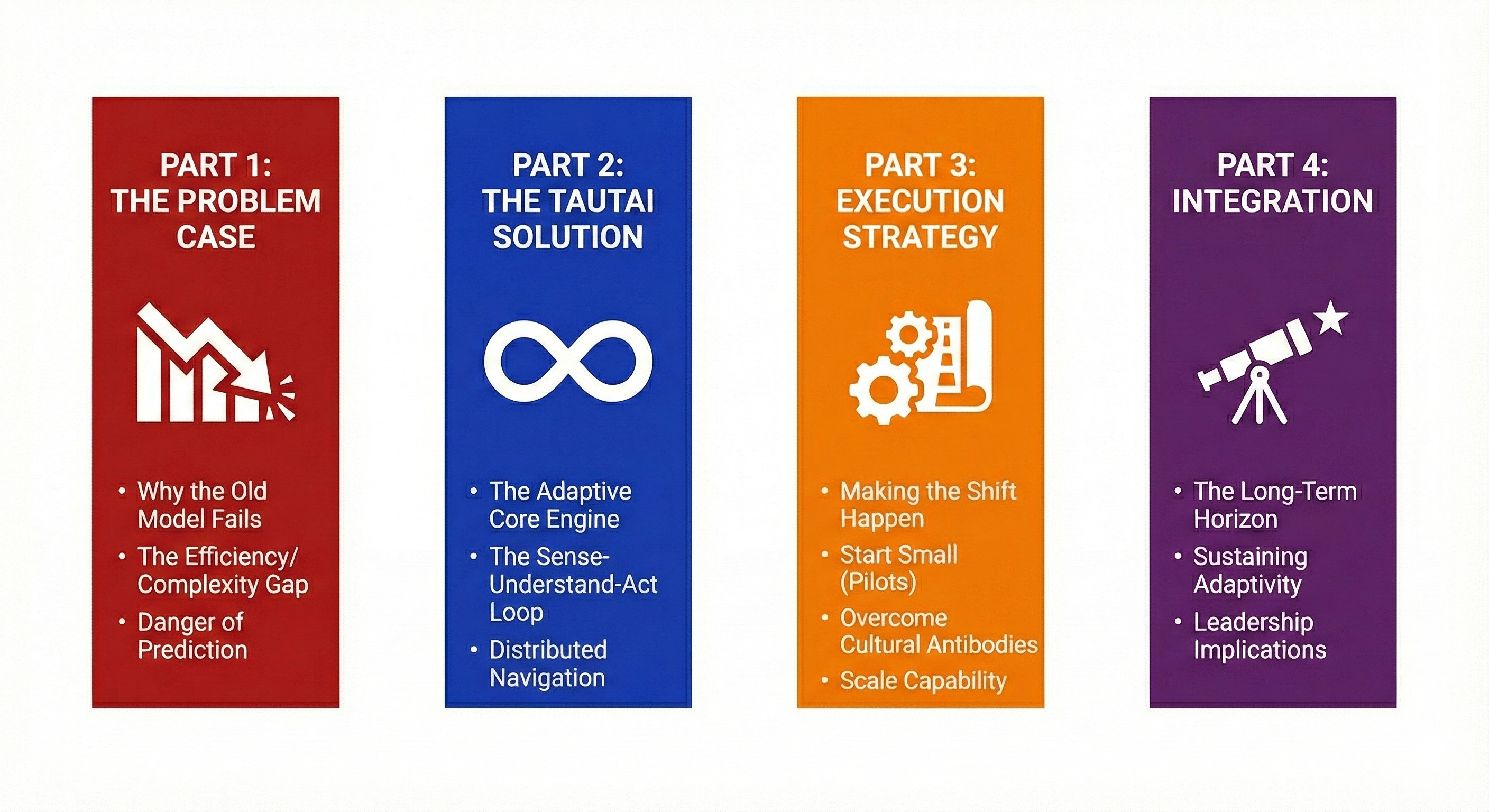
- Part 1 diagnoses why traditional approaches fail.
- Part 2 develops core capabilities: structured network organizations with dynamic teams, scanning systems for weak signal detection, organizational nervous systems enabling continuous adaptation, and emergent strategic navigation.
- Part 3 addresses human dimensions—psychological safety, trust networks, collective intelligence, and organizational identity as competitive advantage.
- Part 4 provides implementation tools, including narrative steering systems, the GOOD-FAEE leadership model, estuarine mapping for navigational change, and methods for creating adaptive space through productive conflict.
Critical concepts include the shift from hierarchical control to distributed decision-making, from episodic change projects to continuous adaptation, and from predict-and-plan to sense-and-respond. The Viable System Model and Cynefin Framework provide diagnostic and navigational tools for managing complexity.
The book concludes with a 90-day action plan featuring four high-leverage interventions: purpose clarity sprints, activated sensing networks, dynamic team pilots, and "zombie project" amnesties to fund adaptation.
Written for change managers, general managers, and consultants, The Tautai Principle offers not theory but a practical operating model for building organizations that navigate uncertainty better than anyone else.