

Step C5: Innovate
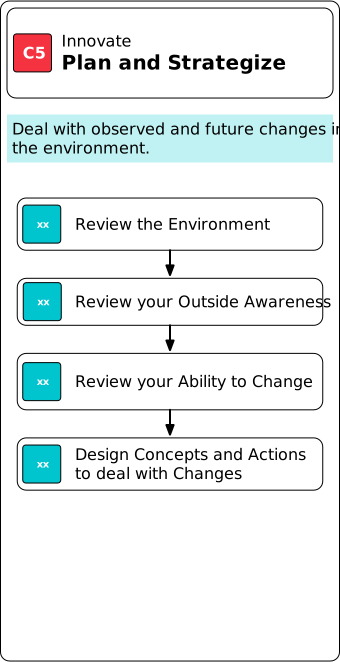
Step C5 focuses on strengthening the organization’s ability to adapt and innovate by enhancing System 4, which is responsible for future planning, research, and external awareness. The results of this step ensure that the organization is not only efficient in its current operations but also well-prepared to anticipate and respond to future challenges and opportunities.
Key Outcomes:
- Enhanced External Awareness and Market Scanning:
- Improved mechanisms for monitoring external trends, technological advancements, and shifts in customer needs.
- Strengthened competitive intelligence and scenario planning to proactively identify risks and opportunities.
- Strengthened Future-Oriented Capabilities:
- Expanded the role of System 4 in long-term strategy development, ensuring better alignment with environmental changes.
- Established dedicated teams or processes to explore emerging trends and potential innovations.
- Bridged the Gap Between Operations (System 3) and Innovation (System 4):
- Improved collaboration between operational management and future-planning teams to balance stability with adaptability.
- Addressed tensions between short-term efficiency and long-term strategic shifts by creating structured dialogue between System 3 and System 4.
- Created a Culture of Continuous Innovation:
- Encouraged experimentation and safe-to-fail initiatives within operational units to drive organic innovation.
- Introduced incentive structures to reward creative problem-solving and proactive improvements.
- Developed Clear Pathways for Implementing Innovations:
- Designed structured processes to move ideas from research and development into operational execution.
- Ensured that promising innovations are systematically tested, refined, and scaled when successful.
- Increased Organizational Agility:
- Improved the ability to pivot and adapt quickly in response to changing external conditions.
- Enhanced strategic flexibility by integrating feedback loops that allow for continuous learning and adjustment.
- Balanced Exploration with Execution:
- Ensured that innovation efforts were aligned with the organization's core mission and operational strengths.
- Avoided excessive focus on either short-term optimization or speculative future projects by maintaining a dynamic balance.
The results of Step C5 position the organization to be both resilient and forward-thinking. By integrating innovation into the organizational fabric, the company ensures its long-term viability and competitive edge. These outcomes set the foundation for Step C6, where the organization creates adaptive spaces that further enable a productive balance between stability and transformation.