

Step C6: Create the Adaptive Space
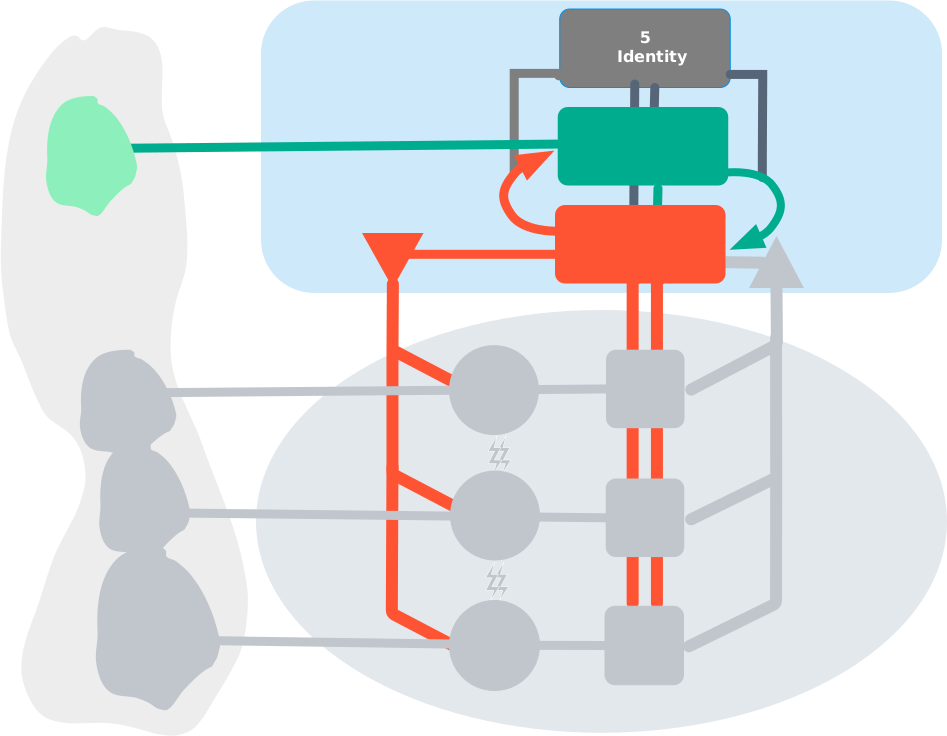
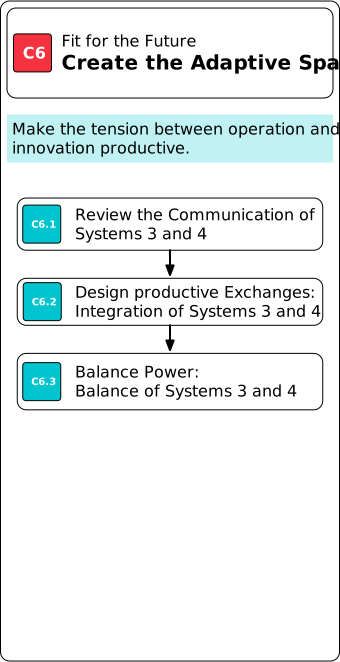
Step C6 focuses on fostering an adaptive space that enables a productive balance between stability and transformation. By enhancing the interaction between System 3 (operational management) and System 4 (innovation and future planning), the organization ensures that it can continuously evolve while maintaining its core effectiveness. The results of this step establish a structured yet flexible environment where strategic innovation and operational efficiency coexist.
Key Outcomes:
- Strengthened Integration Between Stability and Innovation:
- Improved the interaction between System 3 (inside and now) and System 4 (outside and then) to ensure a continuous exchange of insights.
- Reduced tensions between short-term operational priorities and long-term strategic planning by fostering structured dialogue and collaboration.
- Established a Dynamic Adaptive Space:
- Created dedicated platforms (forums, workshops, cross-functional teams) where operational leaders and innovators collaborate.
- Defined mechanisms to evaluate and prioritize innovation efforts without disrupting core operations.
- Enhanced Decision-Making Flexibility:
- Enabled decision-making processes that are responsive to both current operational challenges and future strategic needs.
- Balanced centralized governance with decentralized experimentation to allow for faster adaptation.
- Improved Flow of Insights Between Systems 3, 4, and 5:
- Ensured that System 5 (policy and identity) moderates the dynamic between stability and change, preventing either from becoming dominant at the expense of the other.
- Strengthened alignment between operational execution and long-term strategic vision.
- Encouraged a Culture of Experimentation and Learning:
- Reduced fear of failure by implementing safe-to-fail experimentation models that allow for testing new approaches with minimal risk.
- Integrated iterative learning loops that enable the organization to refine and improve its adaptive strategies continuously.
- Increased Organizational Agility and Resilience:
- Developed a structured yet flexible approach to handling environmental uncertainties, ensuring that the organization can pivot when necessary.
- Created mechanisms to detect early signals of change and respond proactively, rather than reactively.
- Balanced Stability and Change for Sustainable Growth:
- Ensured that operational efficiency is maintained while enabling transformation through controlled and strategic adaptation.
- Prevented the organization from becoming too rigid or too chaotic by maintaining a dynamic equilibrium between core operations and innovation efforts.
The results of Step C6 solidify the organization's ability to remain viable in an ever-changing environment. By institutionalizing an adaptive space, the organization not only ensures resilience but also fosters a culture that embraces change while safeguarding operational effectiveness. These outcomes set the stage for the final phase of the Viability Canvas—Step D: Act—where these improvements are put into practice through change implementation strategies.
- Step C1: Plan the Product Flow
- Step C2: Shape Operations
- Step C3: Stabilize
- Step C4: Optimize
- Step C5: Innovate
- Step C6: Create the Adaptive Space