

Functional Organization Dissociation
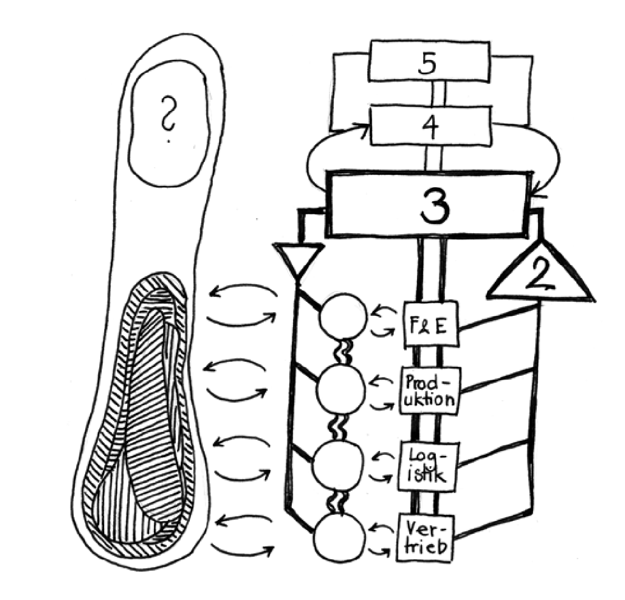
The pathology occurs when Systems 1 are not productive systems, but Systems 1 are the functional units like logistics, sales, and production.
This typically leads to symptoms like
- extreme dependencies between the units
- Environments also have a high degree of overlap
- virtually no autonomy; everything is controlled through System 3
Dysfunctions
Look for the following symptoms and dysfunctions.
Fragmented Subsystems
- Isolated Departments: Departments or units within the organization operate in silos, with minimal interaction or collaboration. This isolation prevents sharing information and resources, leading to redundancies and inefficiencies.
- Independent Strategies: Each subsystem may develop local strategies and goals, which can conflict with or diverge from the organization's global objectives.
Poor Communication
- Lack of Information Flow: Essential information does not flow effectively between different parts of the organization. This lack of communication can result in misunderstandings, delays, and a lack of coordinated effort.
- Disconnected Feedback Loops: Feedback mechanisms are weak or nonexistent, preventing the organization from learning from its experiences and adapting to changes.
Weak Central Coordination
- Ineffective Central Management: The central management or coordination functions (System 2 and 3) are weak, failing to ensure that different parts of the organization work together towards common goals.
- Absence of Integrative Processes: No effective processes are in place to integrate the activities and outputs of different subsystems, leading to fragmented operations.
Conflicting Objectives
- Misaligned Goals: Different units may have goals that are not aligned with each other or with the organization's overall strategy. This misalignment can lead to internal competition and conflicts.
- Divergent Priorities: Priorities within the organization are not harmonized, causing a lack of focus and direction.
Try This
To address and mitigate dissociation pathology, you might try the following interventions:
Enhancing Communication
- Establishing Robust Channels: Develop and maintain effective communication channels that ensure the free flow of information between all parts of the organization.
- Implementing Feedback Mechanisms: Create strong feedback loops that allow the organization to learn from its experiences and adapt to changes.
Strengthening Central Coordination
- Empowering Central Functions: Strengthen the central coordination functions (System 2 and 3) to ensure all subsystems are aligned and working towards common goals.
- Integrative Processes: Develop and implement processes that integrate the activities and outputs of different subsystems, ensuring coherence and synergy.
Aligning Goals and Strategies
- Unified Strategic Planning: Develop a unified strategic plan that aligns the goals and efforts of all departments and units with the organization's overall objectives.
- Harmonizing Priorities: Ensure that the priorities of different parts of the organization are harmonized and support the broader strategic direction.
Fostering a Cohesive Culture
- Shared Vision: Promote a shared vision that unites all parts of the organization. This can help create a sense of common purpose and direction.
- Cross-Departmental Collaboration: Encourage collaboration and interaction between different departments and units to break down silos and foster a more integrated approach.
Related Pages
- Bottleneck
- Dominant System 1
- Functional Organization Dissociation
- Matrix Organization Schizophrenia
- Uncontrolled Growth Cancer