

Step B1: Review the Results of the Analysis
Step B1: Review the Results of the Analysis
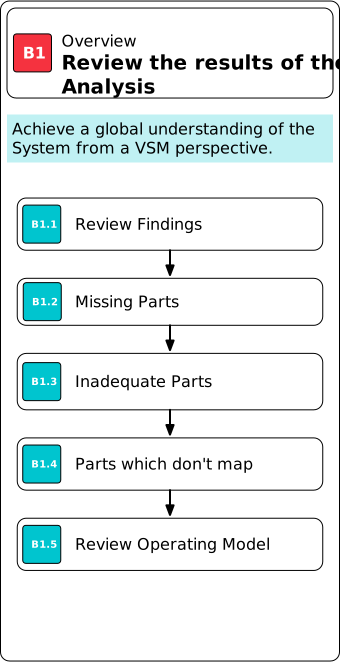
Step B1 consolidates findings from the Observe phase (Step A1–A6) to establish a holistic understanding of the System-in-Focus (SiF). This step highlights key strengths, gaps, and opportunities for improvement, preparing the organization for deeper diagnosis in subsequent steps.
Key Outcomes:
- Comprehensive Overview of the System-in-Focus:
- The organization’s structure, key functions, and decision-making processes have been mapped.
- The relationships between operational units, coordination mechanisms, management structures, and external influences are clearly defined.
- Identified Missing or Weak Components:
- Gaps in key VSM elements (Systems 1–5) were detected, revealing potential dysfunctions.
- Areas where coordination (System 2), optimization (System 3), strategic foresight (System 4), or governance (System 5) are lacking were identified.
- Highlighted Areas of Misalignment or Overlaps:
- Noted overlapping roles, redundant processes, or conflicting responsibilities within the organization.
- Identified areas where decision-making is unclear or inconsistently applied across different levels.
- Evaluated the Effectiveness of Information Flow:
- Assessed how well real-time data, reporting structures, and feedback mechanisms function.
- Identified blind spots in communication channels that prevent effective decision-making.
- Detected Potential Bottlenecks or Operational Inefficiencies:
- Highlighted resource constraints, performance issues, and process delays affecting operational efficiency.
- Assessed whether management oversight (System 3) is effective in optimizing workflows.
- Prepared the Foundation for Diagnosing Dysfunctions:
- Established a baseline for identifying pathologies, systemic imbalances, and improvement opportunities in Step B2.
- Prioritized critical areas that require immediate attention versus long-term strategic adjustments.
The results of Step B1 ensure that the organization has a clear and structured understanding of its current state, setting the stage for targeted diagnostics in Step B2, where dysfunctions and systemic pathologies will be examined in greater depth.
Subpages
Related Pages
- Step B1: Review the Results of the Analysis
- Step B2: Look for Dysfunctions and Pathologies
- Step B3: Collect Pain Points Revealed by Other Means