

Step B3: Collect Pain Points Revealed by Other Means
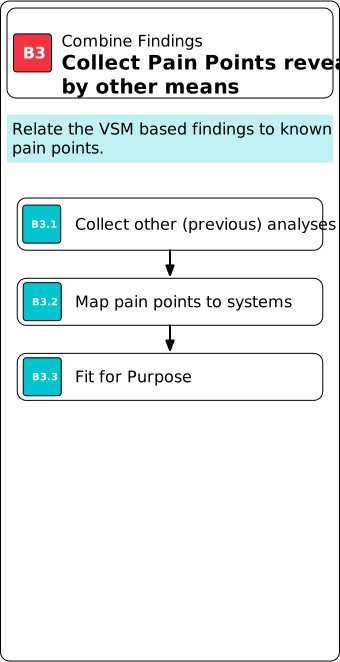
Step B3 integrates insights from alternative diagnostic methods, past assessments, and stakeholder feedback to complement the findings from Step B2. By combining multiple perspectives, this step ensures that all critical dysfunctions, inefficiencies, and improvement opportunities are recognized before moving into the Decide phase (Step C1–C6).
Key Outcomes:
- Consolidated Findings from Previous Analyses:
- Reviewed existing audit reports, performance reviews, employee surveys, and customer feedback to validate or expand upon dysfunctions identified in Step B2.
- Cross-checked past strategic assessments and benchmarking reports to identify recurring pain points and long-term trends affecting the organization.
- Mapped Additional Pain Points to the VSM Structure:
- Categorized external feedback (e.g., customer complaints, supplier inefficiencies) and internal feedback (e.g., employee frustrations, process bottlenecks) within VSM components (Systems 1–5).
- Identified pain points not previously covered by the Viability Canvas analysis, ensuring a more holistic diagnosis.
- Validated Systemic Dysfunctions Through Stakeholder Input:
- Engaged employees, managers, and external partners to uncover real-world challenges that may not be visible through traditional analysis.
- Confirmed whether identified dysfunctions align with daily operational experiences, avoiding theoretical biases.
- Recognized Organizational Blind Spots:
- Highlighted previously overlooked issues in coordination, governance, or strategic alignment.
- Detected hidden cultural or leadership challenges that impact decision-making and execution.
- Assessed Organizational Fitness for Purpose:
- Evaluated whether the System-in-Focus (SiF) is designed and structured to fulfill its mission effectively.
- Identified misalignments between intended strategies and actual execution, highlighting areas requiring redesign.
- Prioritized Pain Points for the Decision Phase:
- Grouped pain points based on urgency, impact, and feasibility of resolution.
- Differentiated between quick fixes, systemic transformations, and adaptive changes needed for long-term viability.
The results of Step B3 ensure a well-rounded understanding of the organization’s dysfunctions and challenges, setting the stage for Step C1–C6, where targeted improvements will be designed to eliminate inefficiencies, enhance adaptability, and ensure long-term viability..
Related Pages
- Step B1: Review the Results of the Analysis
- Step B2: Look for Dysfunctions and Pathologies
- Step B3: Collect Pain Points Revealed by Other Means